Welcome to Pioneers of Safer Healthcare, an interview series celebrating the transformative efforts of Born Green Generation partners in advancing sustainability in healthcare.
Aly Kimber-Herridge“If we want to continue providing quality care in the future, we must embed sustainability in everything we do“

In each episode, we’ll highlight best practices, share personal stories, and uncover the challenges and solutions driving progress.
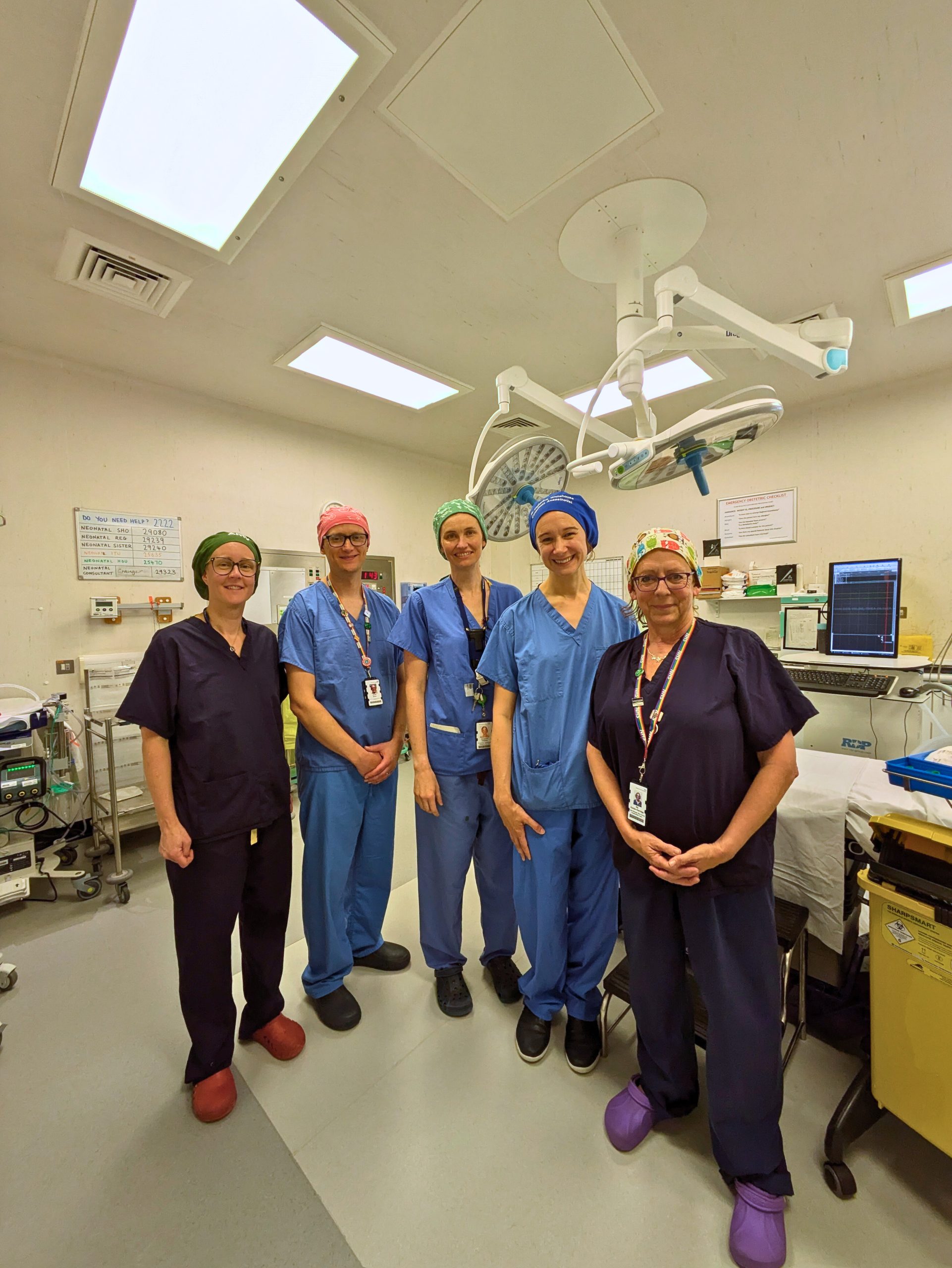
In this episode of Pioneers of Safer Healthcare, we meet Aly Kimber-Herridge, an experienced midwife and sustainability leader at Newcastle upon Tyne Hospitals. Drawing on 30 years of experience in maternity care, Aly reveals how rethinking everyday materials and workflows is helping to reduce waste, minimise harmful exposures, and strengthen the foundations of safer care for the first 1,000 days.
Could you share a bit about your professional background and what led you to your current role?
I’ve been a midwife for 30 years, and my path into the profession began shortly after becoming a mother myself. I had originally studied French at university and wasn’t entirely sure where my career would take me, but I always knew I wanted to work with women in some capacity. Following my own birthing experience, I felt driven to become a midwife, with a real desire to ‘make a difference’. I was accepted onto a direct-entry midwifery training course and qualified soon after.
Since qualifying, I’ve worked across a range of settings – both in hospitals and the community – first on the south coast of England, where I’m from, and later in the north-east, very close to the Scottish border. My roles have included rotating through all areas of maternity care as well as spending time with the maternity risk management team. For the past 12 years, I’ve been a research delivery midwife, which has given me insight into the operational side of clinical trials.
Over the years, I’ve seen a major shift from reusable healthcare items to single-use disposables becoming the norm. In my research midwife role, I was particularly shocked by the amount of plastic waste generated by clinical trials. I noticed that items and equipment often have a short shelf life and end up going to waste, and I began raising concerns about this. So when the Born Green Generation role came up, it felt like the ideal opportunity to get involved and make a positive difference to the United Kingdom’s (UK) National Health Service (NHS) environmental impact.
What motivates you personally to lead sustainability initiatives in healthcare?
Like many people, I deeply value the NHS. If we are to continue providing care for our population in the future, we must embed sustainability in everything we do. I have several family members with long-term health conditions and two young grandsons, and on a personal level, I want to ensure the NHS is there to look after them well into the future.
Midwifery care should always be of the highest quality, meeting the needs of the people receiving it while also recognising the needs of our planet. The effects of climate change will only exacerbate health problems for both patients and staff, and may also threaten the resilience of essential support services, such as the transportation of goods and equipment to our sites.
Considering that 62% of the NHS carbon footprint comes from medicines, medical equipment, and the wider supply chain, it’s vital that we find ways to reduce this and, in turn, lessen our impact on the planet.
The Design for Life roadmap, published by the UK government in January 2025, reinforces this commitment, setting out a clear intention to embed a circular approach to medical products. This aligns strongly with my work and my values, ensuring we provide healthcare that protects the planet as well as the women and babies we care for.
How did Newcastle upon Tyne Hospitals become involved with the Born Green Generation initiative, and what has been the response within your team?
Newcastle Hospitals has a longstanding commitment to caring for both people and the planet. As members of Health Care Without Harm’s Global Green & Healthy Hospitals network, we were invited to join their work focused on protecting a baby’s first 1,000 days from harmful plastics and chemicals. The opportunity to pioneer the Born Green Generation initiative aligned perfectly with our Climate Emergency Strategy goals, so we were keen to take it forward.
Like many Trusts in the UK, we work within financial constraints, so the most impactful sustainability projects are those that deliver environmental benefits alongside potential savings. With this in mind, we’ve prioritised initiatives that can achieve both outcomes.
When the pilot was introduced, our maternity unit was experiencing significant change, with a new senior management team and several competing priorities. This made staff engagement more challenging, despite strong support for the project’s aims. To maintain visibility, we included regular updates in the monthly maternity staff newsletter, and I’ve taken every chance to share the project’s goals with different staff groups. This consistent communication has helped build understanding and strengthen involvement across the team.
In your view, why is it essential to reduce plastics and harmful chemicals in maternity and paediatric wards? What positive effects have you observed so far in your day-to-day practice?
The first principle of healthcare is to do no harm, yet our dependence on single-use plastics sits in direct contradiction to this. Plastic is everywhere in our environment, and once produced, it never truly disappears. There are thousands of varieties, mostly derived from petrochemicals, and over time, they break down into microplastic particles. These particles have been found in places as remote as the Mariana Trench and the peak of Everest – and, more concerningly, throughout the human body. They have been detected in brain tissue, ovaries, umbilical cords, and even in meconium, a baby’s first stool.
Children are particularly vulnerable because, relative to their size, they consume more food and water and breathe more air than adults. Exposure to plastics and harmful chemicals during pregnancy and the early years can significantly influence health and development throughout a lifetime, which is why preventing such exposure matters profoundly.
Although we routinely discuss the carbon footprint of healthcare and the NHS Net Zero commitment, far less attention is given to the direct health impacts of the materials we rely on. The harm caused by disposable items extends across their whole lifecycle: made from fossil fuels, often in factories far from the UK, with uncertain labour conditions, transported long distances, used briefly, sometimes only for seconds, and then incinerated.
Single-use plastics have become a very common part of everyday healthcare practice, from medical instruments and medication packaging to trays and food containers. Yet many clinicians are unaware of the extent to which these materials affect patient health, and efforts to reduce reliance on them have only begun to scratch the surface.
Emerging evidence shows that microplastics and associated toxins found in the placenta and infant stools can interfere with neurological, reproductive, and immune system development, and may contribute to conditions such as obesity, diabetes, and certain cancers. In the placenta, micro- and nano-plastics may disrupt oxygen and nutrient transfer, and may even affect the maternal–fetal exchange barrier, contributing to outcomes such as intra-uterine growth restriction or stillbirth. The overall level of risk is comparable to that posed by smoking during pregnancy.
Could you give us an overview of the sustainability practices you’ve implemented?
We’ve already made a few changes and have several more in progress. In our antenatal clinics, for example, we’ve replaced single-use plastic gallipots with cardboard pulp pots for collecting urine specimens. It’s a small change, but one that will prevent around 13 kilograms (Kg) of plastic waste from this clinical area alone.
We’ve also swapped our plastic placenta disposal buckets for cardboard-based bins. Although these don’t come into direct contact with patients, we were using 1,906 containers a year, all of which ended up being incinerated. While the cardboard placenta-disposal bins are still incinerated along with the placentas, replacing the plastic buckets with this alternative will eliminate more than 1,000 single-use 11.5-litre plastic buckets from our waste stream each year and prevent around one tonne of plastic from entering the hospital and the anatomical waste stream. This has a direct clinical benefit as well, reducing microplastic particles in the Delivery Suite and Birth Centre environments and helping to protect service users, newborn infants, and our maternity workforce, which is overwhelmingly female and of childbearing age.
Could you tell us more about discontinuing the use of plastic sharps bins in Newcastle upon Tyne?
When we began phasing out the single-use plastic sharps bins, there was naturally some hesitation from staff. The new containers we introduced are designed to be collected, thoroughly cleaned and sterilised by the supplier, and then brought back into circulation. Because they’re more durable and larger than the single-use plastic boxes everyone was used to, some staff initially felt they were a bit bulky and less convenient to work with.
To support the change, we removed the small plastic sharps bins from maternity’s ordering system so they could no longer be purchased. At the same time, we talked with staff about why moving to more sustainable, reusable products is so important – not only for reducing plastic waste but also for creating a cleaner, safer clinical environment.
That combination of removing the old single-use option and building understanding around the benefits really helped shift behaviours. Over time, staff adapted, and the transition to reusable bins became part of everyday practice.
What positive changes have you seen among staff and patients since introducing these sustainability initiatives, and how do you see these behaviours influencing wider change across the Trust and beyond?
We’ve encouraged staff in maternity to avoid unnecessary use of incontinence pads, as each one contains the plastic equivalent of seven disposable cups. This has already reduced usage and, importantly, increased awareness about avoiding single-use products when reusable alternatives are available. For example, instead of reaching for an incontinence pad to mop up a spill, staff can use paper towels or washable fabric towels.
Clinical teams are being supported to reduce waste through more efficient use of resources and to reconsider single-use items where a low-impact, reusable option exists, both at work and at home. We’re also raising awareness of the harmful effects of endocrine-disrupting chemicals (EDCs) found in plastics and common household products.
By encouraging both staff and patients to choose reusable items over disposable ones, we’re highlighting that reducing exposure to plastics benefits both personal health and the environment.
To support this work, a dedicated sustainability section has been added to the Trust’s maternity website, showcasing the changes arising from the Born Green Generation project and the Trust’s wider sustainability commitments. We hope that some of the plastic-reduction initiatives developed in maternity – such as sustainable surgical skin preparation – will be adopted more widely across the organisation.
What future goals or upcoming projects are you excited about as part of the Born Green Generation initiative?
One initiative I’m particularly excited about is our work with the Trust’s linen supplier to design a reusable drape for lower-segment caesarean sections (LSCS). All other obstetric drapes are already washable and reusable, so once this final piece is in place, every drape used in our obstetric theatres will be multi-use. That in itself is a significant milestone, but what makes it even more encouraging is that other Trusts have already expressed interest in adopting the design. It means this work has the potential to extend well beyond Newcastle, helping to drive wider change in how surgical textiles are used across maternity care.
What advice would you give to other healthcare professionals or institutions interested in starting similar sustainability projects?
Engaging stakeholders right from the start is essential. It helps prevent the situation where you’ve invested time in developing a project only to discover later that it can’t progress because of objections from procurement, infection prevention and control, or other key teams. Early conversations save time and create a shared sense of ownership.
Using Quality Improvement tools is also incredibly valuable. They help you identify areas for improvement, set measurable goals, and monitor progress. The PDSA cycle (Plan–Do–Study–Act) supports structured testing of change, while tools like driver diagrams help map out the primary and secondary drivers needed for a successful sustainability project.
It’s also helpful to start with the “low-hanging fruit”, Simple, cost-effective changes that can deliver quick wins with minimal effort or resources. These are often actions that require little investment, have clear environmental benefits, and don’t depend on major organisational change. Early successes build momentum, engage staff and stakeholders, and pave the way for more ambitious projects.
For those looking to develop their skills, the Born Green Generation project is also developing educational modules and frameworks that will be available soon. Within NHS England, the Nursing and Midwifery Sustainability Network provides a community of professionals working toward the same goals, offering a wealth of experience and support for anyone keen to get started.
Thanks to Aly Kimber-Herridge for answering our questions and Newcastle upon Tyne Hospitals for participating in the Born Green Generation initiative.

Explore Born Green Generation’s resources, take the Pledge, or connect with us through our newsletter and social media channels to stay tuned for more stories from the frontlines of sustainable healthcare!